There are no critics on Quartile
Almost every film rating you've ever trusted was shaped by a gatekeeper. Rotten Tomatoes counts only approved critics. Metacritic weights outlets by prestige. Even IMDb quietly runs your vote through a weighting formula before it counts. Somewhere between you and the number, someone decided whose opinion mattered more.
Quartile doesn't do that. There's no critic tier, no approved list, no panel handing down a verdict. A film's rating is built from the people who actually watched it — that's the whole design.
Why "no critics" is the point
I love good film criticism. But a critic, however brilliant, is one taste. When a percentage or a Metascore gets treated as the verdict, you're quietly outsourcing your opinion to a small group of professionals who don't share your taste, your mood, or your reasons for pressing play.
The people who watch a film are the ones who should get to say what it's worth. Not because a crowd is always right — but because it's honest. It's the real reaction of real viewers, not a curated consensus polished for a pull-quote.
The crowd, but with a shape
Here's where Quartile parts ways with a plain "audience score." A number like "84% liked it" is a headcount. It tells you how many, never why.
And it's the same trap at any scale, not just percentages. Five stars flattens a film into a single mood, with a three-star middle that's just a polite shrug. A 1–10 average is the most familiar number in movies, but can you honestly tell a 7.7 from a 7.8? Every one of them answers what did people rate it? — none of them answers why is it rated what it is.
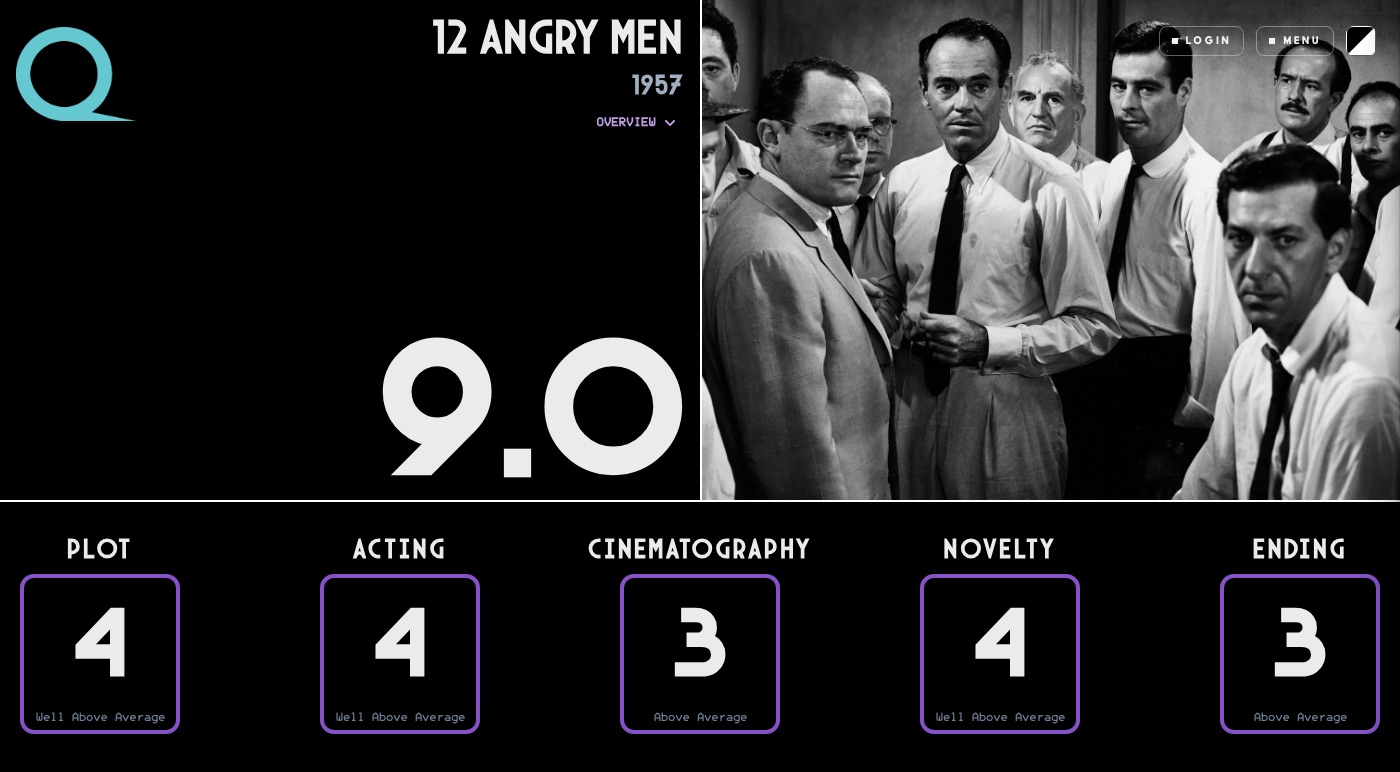
On Quartile, everyone rates across the same five categories — Plot, Acting, Cinematography, Novelty, and Ending — each on a 1 - 4 scale, no neutral middle:
Nobody gets to shrug. Average those five across everyone who watched a film and you don't just get one number — you get its shape: a read on each part of the film on its own. You can see what it nails and where it falls short — a stunning-looking film with a flat ending reads as a high Cinematography sitting right next to a low Ending, instead of both vanishing into one averaged-out score.
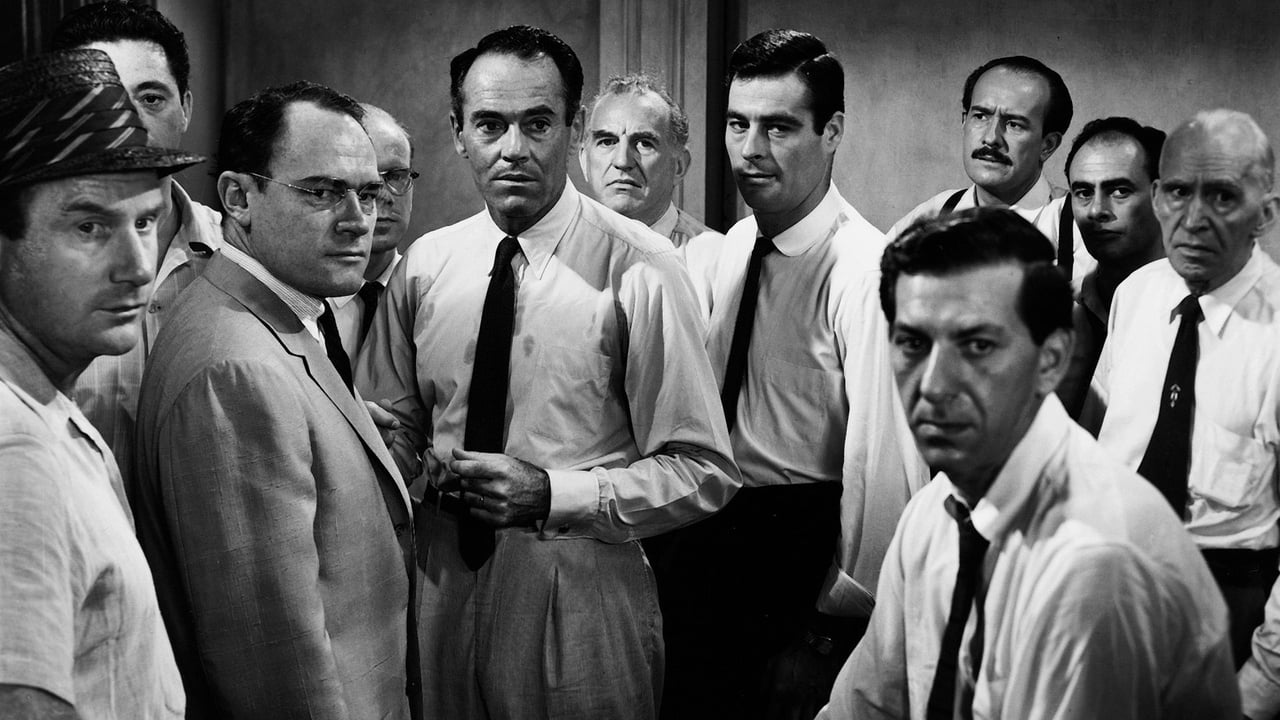
There's no better emblem for the no-critics idea than 12 Angry Men — a verdict reached by a room of ordinary people, not one expert handing it down. That's the spirit of the thing: the people who actually watched are the ones who decide.
No gatekeeper means no gate
You don't need to be accredited. You don't need to write for anyone. You don't need to be right. You just need to have watched the film and have a real opinion about it. Rate it across the five, and your read becomes part of the picture — the same as everyone else's.
That's the version of film rating I always wanted: not a verdict handed down from on high, but the honest, argued-over, five-category read of the people who actually showed up and watched.